
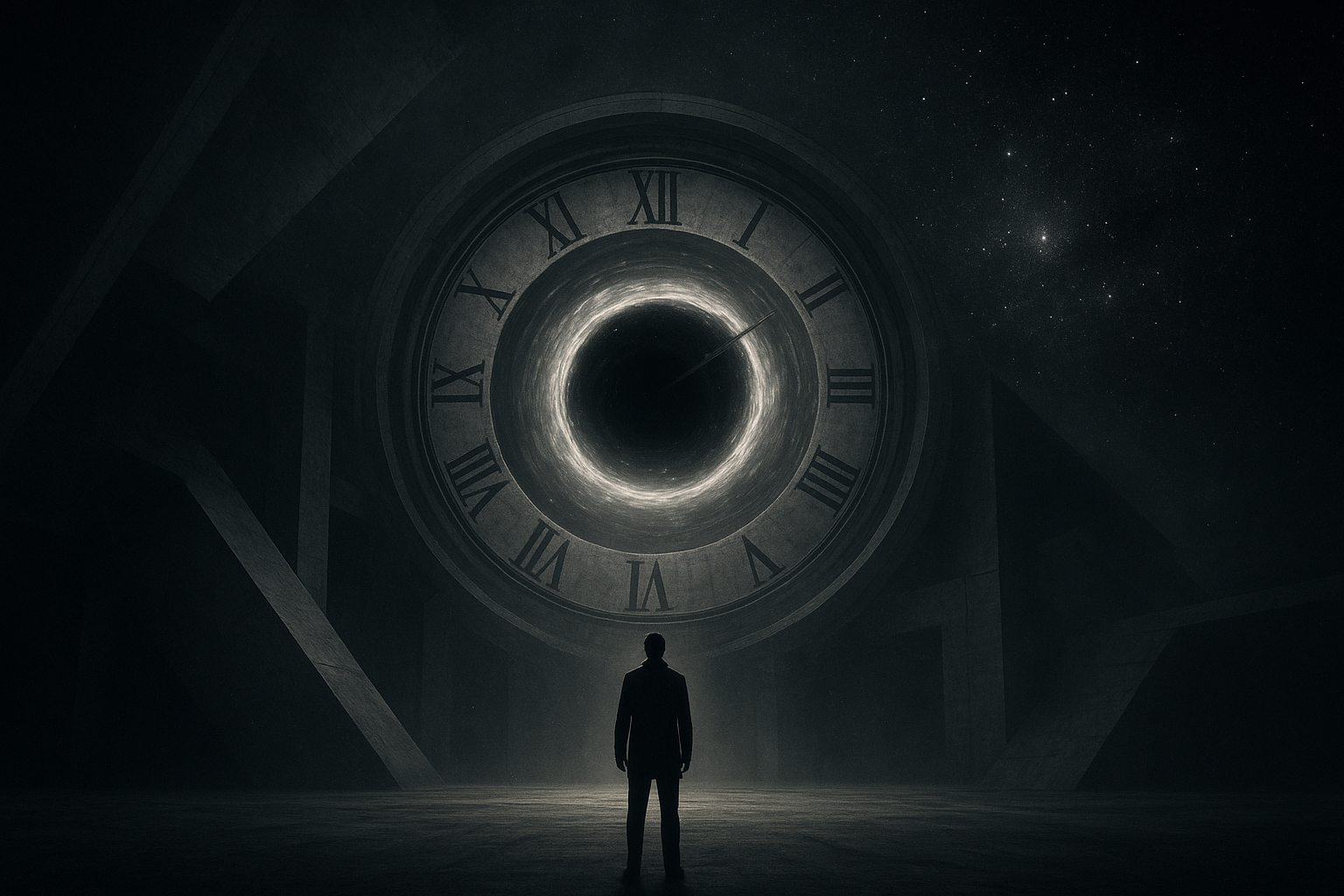
If “greatness” means a rare fusion of vision, craftsmanship, originality, and cultural impact, then Christopher Nolan stands in a league of his own among contemporary filmmakers. He doesn’t just make movies; he engineers experiences that rewire how audiences think about time, identity, consequence, and memory — inside theaters that then begin to feel like cathedrals.
This makes Nolan a working artist whose films reshape the medium from the inside out.
1. He turned complexity into a mass-market language
Nolan took structures once considered “arthouse” territory — nonlinear narratives, philosophical abstraction, unreliable memory, ontological puzzles — and smuggled them into blockbuster cinema without diluting them.
- Memento made fragmentation the story.
- Inception taught the world that a heist movie could also be a thesis on consciousness.
- Interstellar fused astrophysics with parental grief.
- The Dark Knight showed the fantastical in the normal.
Where other directors simplify to reach scale, Nolan does the opposite: he trusts audiences to rise. And they do. That trust is the foundation of his success — and his quiet revolution.
2. He makes spectacle mean something again
Modern cinema is drowning in effects. Nolan reminds us that spectacle only matters when it serves an idea.
A rotating hallway isn’t impressive because it spins — it’s impressive because it mirrors a mind losing equilibrium.
A collapsing city isn’t empty grandeur — it’s the architecture of a dream unraveling.
A black hole isn’t digital wallpaper — it’s grief modeled with gravity.
Nolan restores an old truth:
Effects should reveal something true. Not replace truth with artificiality.
3. He is one of the last guardians of cinema as a physical art form
While much of the industry drifted toward digital convenience, Nolan doubled down on celluloid, IMAX, and in-camera realism. He fights for the theater as a sacred space of attention in an age of scrolling.
Not for nostalgia —
for presence.
There’s a reason his films feel “bigger” than life: they aren’t designed for phones. They’re designed as rituals of focus. When Nolan releases a film, he doesn’t drop content — he creates a shared experience.
4. His films age instead of expiring
Blockbusters often peak on opening weekend. Nolan’s films grow.
People rewatch Inception for different reasons decades later.
Interstellar becomes more human the older you get.
The Prestige deepens when you’ve lived enough to understand mystery.
Rewatch value is rare.
Meaning accumulation is rarer.
Nolan crafts films that return as different films each time — because you change.
That’s art.
5. He writes his own rules — and then breaks them
Nolan isn’t just a director. He’s an architect.
He designs structures where:
- time folds,
- causality splinters,
- identity smears,
- memory lies,
- fate argues with free will.
No matter how complex the machine becomes, there’s always a human question driving it.
What would you sacrifice for truth?
Who are you without memory?
Does love defy physics?
What does genius cost the soul?
This is not franchise logic.
This is spiritual engineering.
6. He makes mainstream cinema feel dangerous
Safe movies don’t disturb you.
Nolan’s do.
He doesn’t tell you what to think.
He dares you to keep up.
That difference matters.
In an era that rewards predictability, Nolan builds uncertainty.
In a culture of explanation, he plants enigma.
7. Nolan doesn’t chase the future. He drags it with him.
Other directors optimize for relevance.
Nolan reshapes the terrain so relevance follows him.
Ten years from now, audiences won’t remember most “content.”
They’ll remember:
the hallway that turned,
the dream that folded,
the rocket that carried a father through time,
the bomb that shattered silence.
Because Nolan isn’t documenting the era.
He’s directing it.
And that’s what the greatest directors do.