
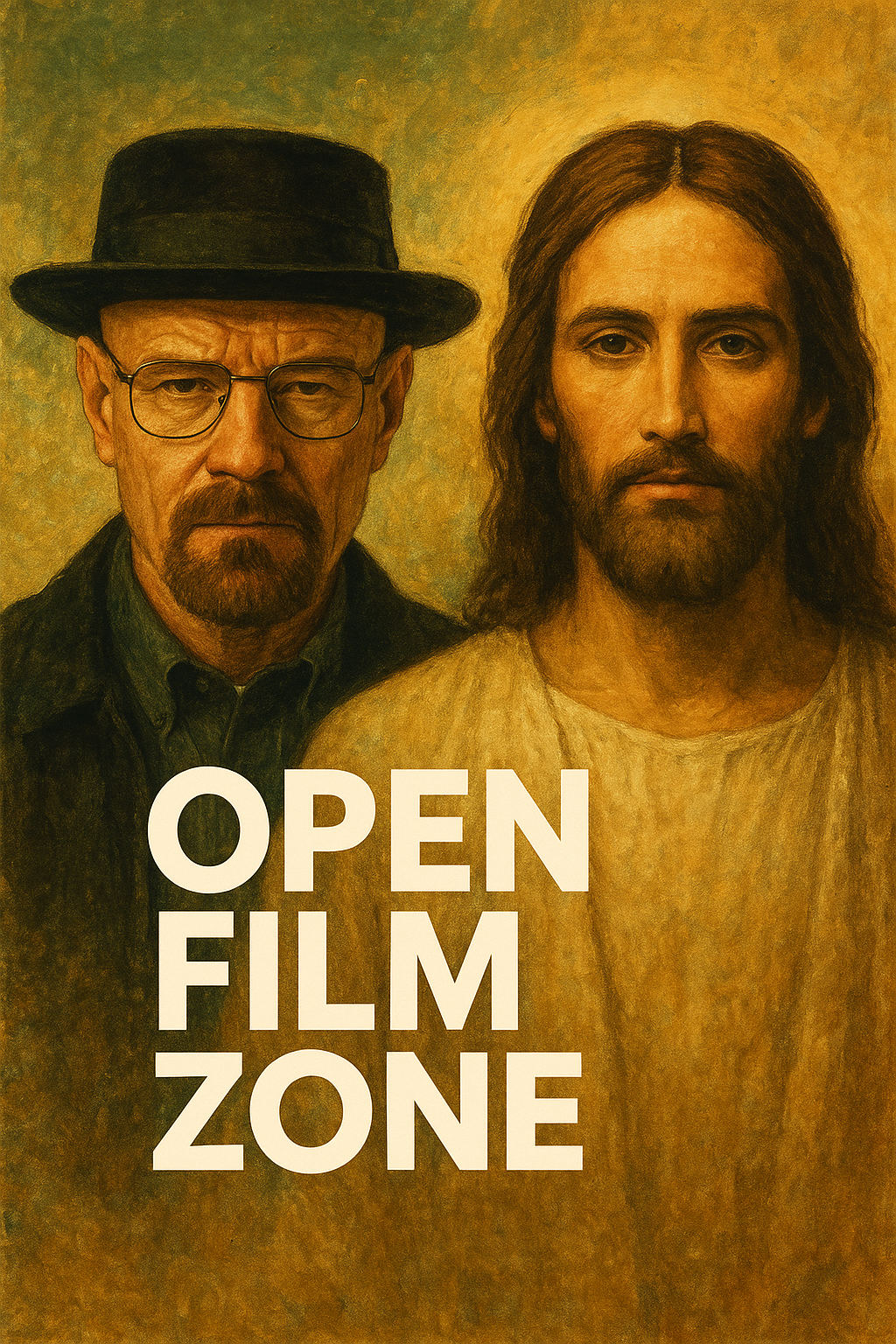
How the moral descent of one man made room for the moral ascent of another.
When Breaking Bad first aired in 2008, few could have guessed that it would not only redefine television drama but also prepare the cultural and artistic soil for a series like The Chosen (2019–). One chronicled the making of a meth kingpin; the other, the birth of a messiah. One showed the collapse of morality through realism; the other, the return of morality through that same realism.
In a strange, almost alchemical way, Breaking Bad didn’t just break the television mold—it cleared the ground for the sacred to be seen again.
Moral Realism
Breaking Bad didn’t lecture or moralize—it observed. The show’s power came from its refusal to flinch. Every action had consequence, every choice had weight. Walter White’s slow transformation into Heisenberg wasn’t just addictive television—it was a masterclass in realism as moral revelation.
By the end, audiences weren’t just watching a chemistry teacher lose his soul; they were confronting their own shadow—the quiet question of what they might become under pressure.
This ultra-realism—painstaking, patient, methodical—broke the audience open. It stripped away sentimentality and left viewers hungry for something deeper. Something true, but also redemptive.
That hunger is what The Chosen answered.
From Breaking Bad to Breaking Good
In a sense, The Chosen is Breaking Bad’s mirror image. Where Walter White’s world is dust and decay, The Chosen’s world is dust and light. Both inhabit the same naturalistic frame—long silences, imperfect people, mundane settings—but where Vince Gilligan used realism to reveal corruption, Dallas Jenkins uses it to reveal grace.
Both series slow the rhythm of storytelling to something closer to human time. Every pause matters, every glance carries meaning. They make the sacred tangible—not by spectacle, but by sincerity.
If Breaking Bad asked, “How far can a man fall?”, The Chosen asks, “How deeply can a person be redeemed?”
They are two halves of the same story—one descending into the pit, the other climbing back toward the light.
Power of the Real
Both shows understand that truth is most powerful when it’s not preached but lived. The miracle of Breaking Bad was its precision—how ordinary moments became moral earthquakes. The miracle of The Chosen is its humanity—how divine encounters are made small, intimate, and real.
It’s no coincidence that The Chosen’s Jesus often speaks in plain tones and pauses in silence—the same realism that made Walter White believable now makes Christ believable.
Television, once dominated by cynicism, found through Breaking Bad a new honesty—and through The Chosen, a new hope.
Good and Evil
If the medium evolves in cycles, Breaking Bad and The Chosen are two poles of one moral continuum. The first tore down illusions about the goodness of man; the second builds a vision of divine goodness through humanity.
Both series, in their own ways, return us to the question:
Who are we, and what are we capable of—both in ruin and in redemption?
This movement from Breaking Bad to The Chosen reflects something broader in culture: a longing for realism that doesn’t end in despair. A realism that admits the darkness but doesn’t worship it.
In the end, Breaking Bad prepared us for The Chosen because it taught us to see the truth, even when it hurts.
And now, that same truth can be used to heal.
That’s the artistic vision OFZ stands for—a global stage where the full spectrum of the human condition can be seen, from fall to grace, from chaos to order.
What will the next great series be?
You can create it.
In the Zone.