
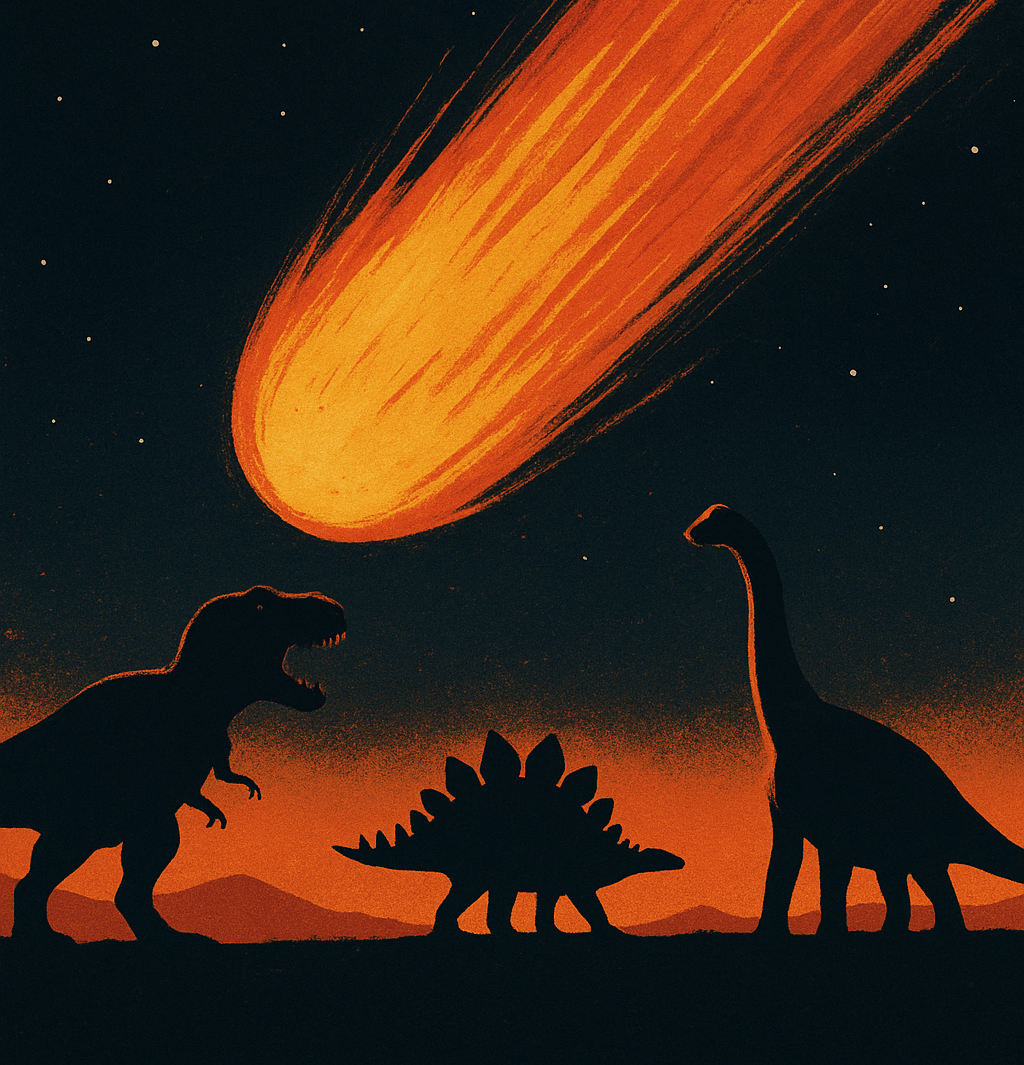
For over a century, the film industry has lived under the shadow of its own prehistoric giants. Massive, slow-moving, territorial creatures — the studios, the gatekeepers, the committees, the old-guard tastemakers — once ruled the cinematic landscape with absolute dominance.
They were powerful. They were impressive. They shaped entire worlds.
But like the dinosaurs, they became too big, too rigid, too convinced of their own permanence.
And as history teaches us, nothing is more fragile than a creature that believes it can never go extinct.
The Age of the Cinema Dinosaurs
The traditional filmmaking world built empires on exclusivity. A tiny elite decided who got funded, who was heard, who was let inside the gates. Festivals became fortresses. Production companies became kingdoms. Access — not talent — became the true currency.
Movements, voices, entire cultures were left outside the walls, knocking, begging to enter.
The dinosaurs kept grazing on the same land, eating from the same fields, repeating the same cycles:
- The same formulas
- The same stars
- The same genres
- The same “marketable” stories
- The same narrow definition of what cinema should be
And like all ancient creatures, they grew slower. Heavier. More bureaucratic. Less in touch with the world around them.
The artists evolved.
The audience evolved.
But the system did not.
Then Comes the Comet
Every era of stagnation calls for a shock — a rupture big enough to reshape the world.
Not a gentle nudge.
Not an internal memo.
A comet.
In the metaphor of modern filmmaking, the comet is not destruction for destruction’s sake. It is transformation. A clearing of space. A reset of the ecosystem.
This comet hits not with fire, but with openness.
Not with violence, but with visibility.
Not with collapse, but with creation.
The comet is the moment when the world realizes:
The power to create and share stories no longer belongs to a select few — it belongs to everyone.
OFZ: The Impact Event
Open Film Zone is not the asteroid that kills cinema.
It’s the asteroid that kills the old cinema — the dinosaur cinema.
What replaces it is not chaos, but a flourishing new landscape:
- A world where every filmmaker gets a chance.
- A world where audiences decide what matters.
- A world without gatekeepers standing like fossilized statues above the rest.
- A world where visibility is not purchased — it is earned through honesty, creativity, and courage.
The dinosaurs fall so the mammals can evolve.
The old system collapses so countless new voices can rise.
The era of scarcity ends so the era of abundance can begin.
The New Ecosystem
In this new world:
- The smallest filmmaker can compete with the largest studio.
- Stories once deemed “too personal,” “too spiritual,” or “not commercial enough” now have a home.
- The audience becomes the oxygen that gives projects life.
- Talent no longer needs permission to exist.
This is not the end of cinema.
This is cinema rediscovering what it was always meant to be:
creative, alive, human, and free.
Extinction Isn’t the End — It’s the Beginning
Dinosaurs dominated until they couldn’t.
The old film system dominated until it shouldn’t.
Every great rebirth in nature comes from a great ending.
Today, the comet has already entered the atmosphere.
The light is already glowing on the horizon.
The question is not whether the dinosaurs will survive.
The question is:
Who will thrive in the world after them?
And the answer is simple:
Those who are ready for an open, democratic, borderless cinema.
Those who are ready for the new age.