
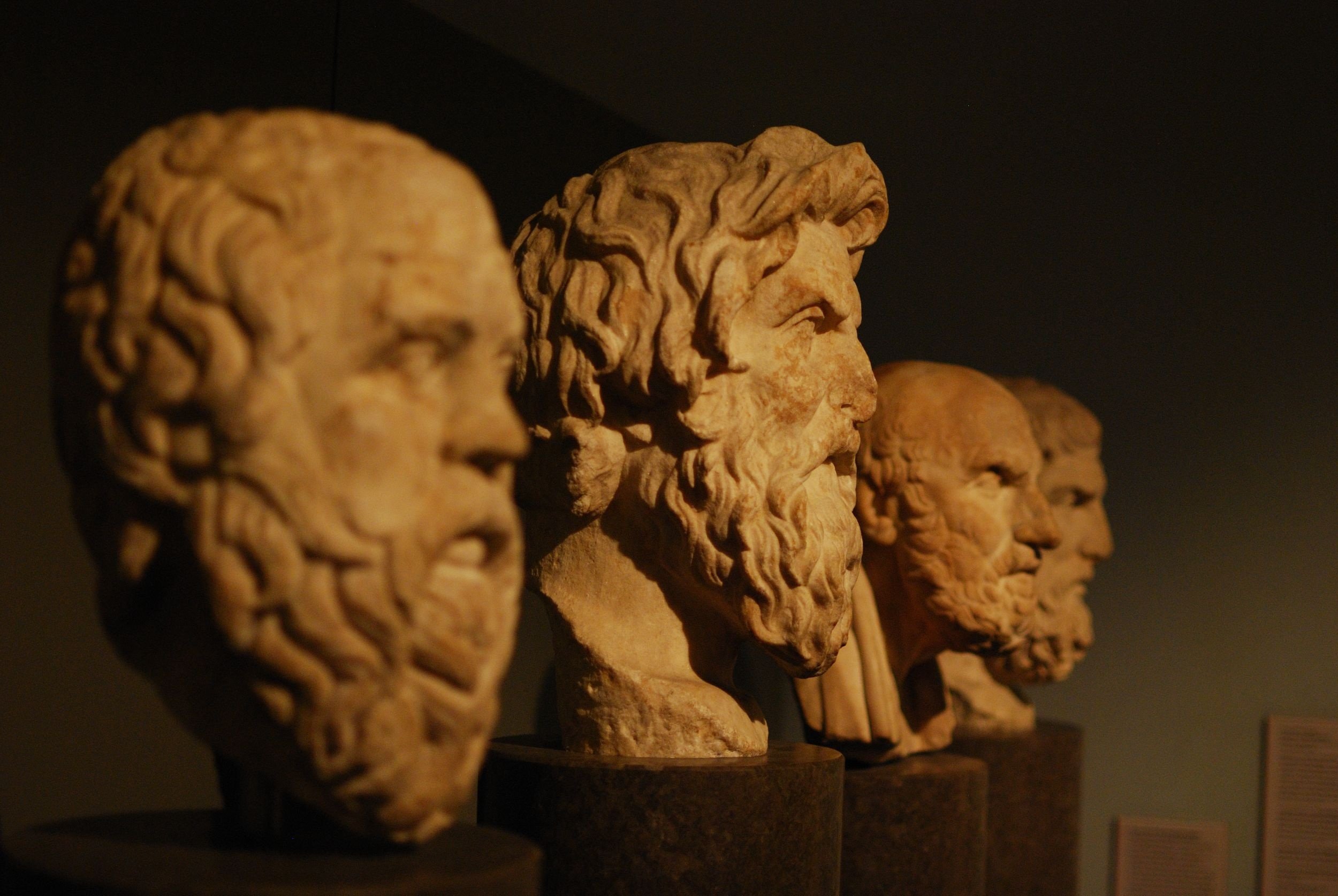
Aristotle’s Poetics is the earliest surviving work of dramatic theory — and it’s fundamentally about how stories move us, why they matter, and how structure, emotion, and catharsis are tools for understanding the human condition.
In Poetics, Aristotle defined storytelling not just as entertainment — but as a vital expression of human truth. He believed that tragedy (and by extension, all great drama) must evoke pity and fear, leading to a catharsis — a purging of emotion, a revelation of meaning.
This wasn’t just a theory. It was a blueprint for how stories help us live.
At Open Film Zone, we honor that legacy.
We believe in structure, not as formula, but as a tool to elevate chaos into meaning.
We believe in character, not as cliché, but as a mirror of the soul.
And we believe in catharsis, not as spectacle, but as emotional awakening.
In an industry driven by algorithms and spectacle, OFZ offers a return to what Aristotle called mimesis — the imitation of life, shaped into form, for the sake of insight and empathy.
Here:
Every creator, whether a student or seasoned artist, has a chance to practice the poetics of film.
Every story, whether polished or raw, carries the possibility of catharsis.
And every viewer is invited not just to consume — but to feel, reflect, and transform.
Film is today’s theater. OFZ is its public stage.
We open the curtain.