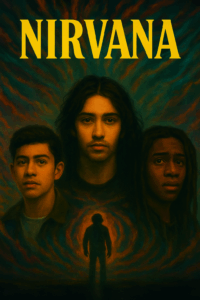
Read the Nirvana screenplay here: https://openfilmzone.com/project/nirvana/
Before one can practice the art of “show, don’t tell”, I suppose ‘pitching’ is about telling first so to show later. The following is an experiment by the writer in attempting to analyze his own work:
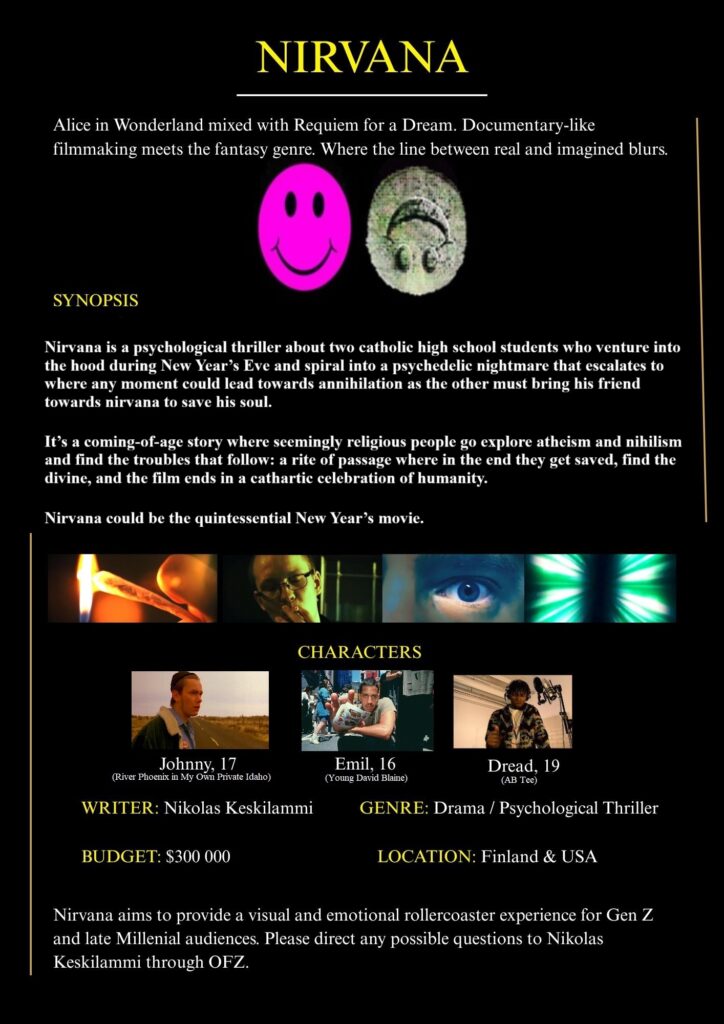
Nirvana: The Vision Quest for Gen Z
Nirvana is a cinematic depiction of a soul’s awakening. Set within a metaphysical labyrinth, Nirvana follows a protagonist who journeys through psychological purgatory, confronting his own dual nature, and discovering that heaven and hell are internal states of mind. The result is a script that reads like a drug hallucination collapsing into a sacred vision. At its core, Nirvana is not only a movie about drugs, religion, friendship, love, death, or rebellion — it’s about transformation. The film uses the grammar of psychedelia and the rhythm of the streets to tell a story as ancient as the human condition: the search for God through suffering.
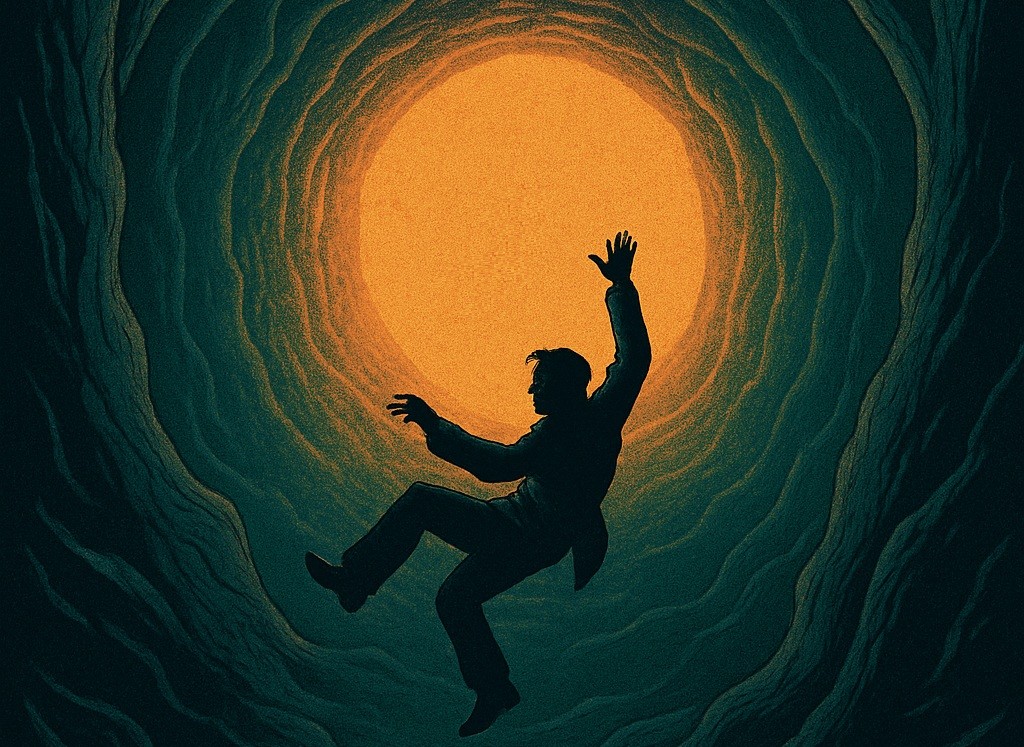
The screenplay opens in darkness — Johnny overdosing — and returns to that scene before the final act of “Nirvana”. The entire “journey” is a liminal state between life and death. It is a story about three broken men who, on New Year’s Eve, realize they are fragments of one soul — each carrying the divine spark that unites all creation. Johnny, Emil, and Dread — three names, one being — represent the fractured psyche of modern humanity. The believer, the doubter, and the wanderer. Each searches for redemption in a world that’s forgotten what redemption even means. Beneath the surface, it’s the Biblical corpus retold in modern form — a cinematic parable where the streets replace the desert, and the voice of God speaks not through thunder, but through silence. It’s about the soul’s journey toward truth.
Johnny, Emil, and Dread are not heroes or villains — they’re us. They’re the divided human psyche:
Together, they form a trinity of confusion, spirit, and redemption. It’s not the story of three men becoming perfect. It’s the story of three men realizing they already carry divinity within. And this realization is what Nirvana stands for. That we are all mirrors of the divine.
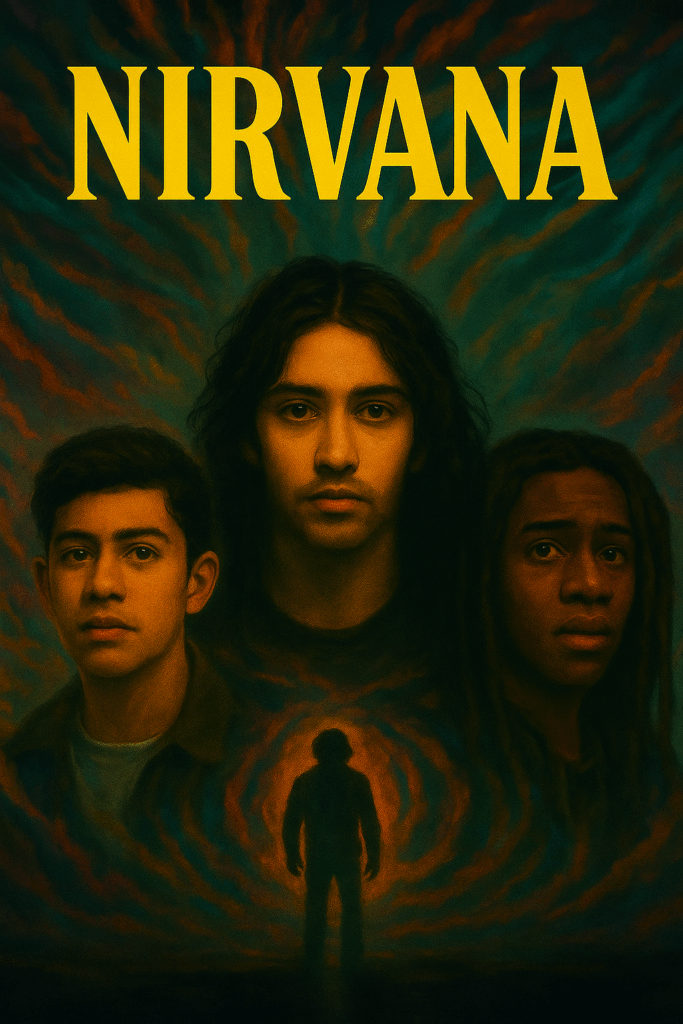
The structure follows Joseph Campbell’s Hero’s Journey:
- Call to Adventure: Johnny’s rejection of war and turn toward spirituality.
- Descent: Drug use and entry into Dread’s world.
- Trials and Temptations: The gang encounter and violence.
- Death and Rebirth: Overdose and transcendental visions.
- Return (Ambiguous): Whether Johnny survives or not is irrelevant — his consciousness has evolved.
The script requires no great budget to film — only great courage. It carries no agenda — only the truth that the human soul is the most powerful subject in the universe.
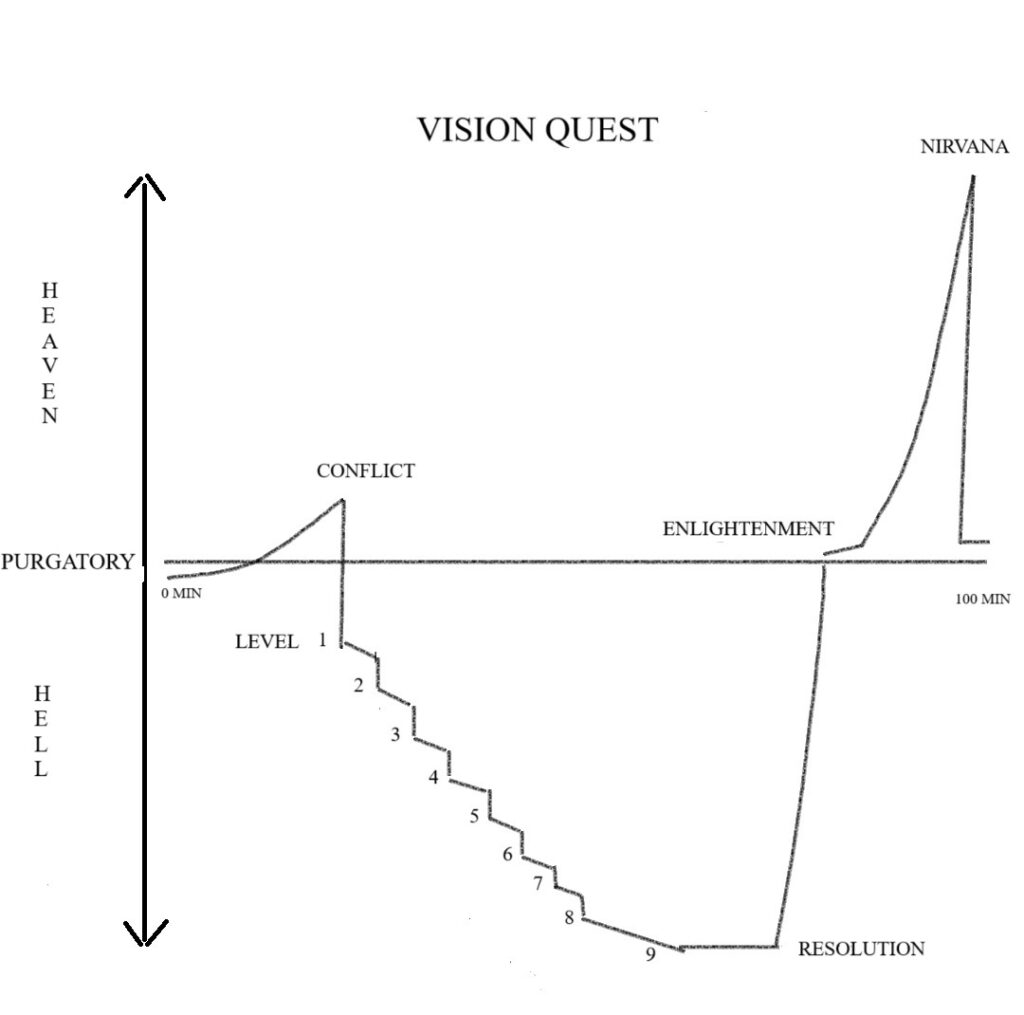
The Descent and the Fire
At its core, Nirvana dramatizes the spiritual principle found in Dante’s Divine Comedy: that one must pass through fire to reach heaven. Johnny’s “trip” — a descent into altered states and eventual near-death — is less about drugs than about the metaphysical initiation of the soul. His psychedelic visions parallel religious and mythological rites: the Eleusinian Mysteries, shamanic initiation, and the hero’s descent into the underworld. The cannabis and DMT experiences become portals into humanity’s ancient spiritual memory.
The overdose scene that begins and frames the story is not an end but an initiation. In that space between life and death, Johnny encounters the fractured psyche of the postmodern world. Johnny’s journey begins in rejection — of war, of false ideals, of himself. He descends into the underworld of addiction and chaos, yet what he finds there is not mere darkness, but the alchemical fire of purification. The film’s title, Nirvana, points not to annihilation, but to liberation — the extinguishing of lower consciousness so the higher spirit may shine.
The screenplay’s cyclical structure — beginning and later returning to the same darkness — creates a loop of consciousness. The viewer is meant to feel that they, too, have crossed the threshold and returned changed.
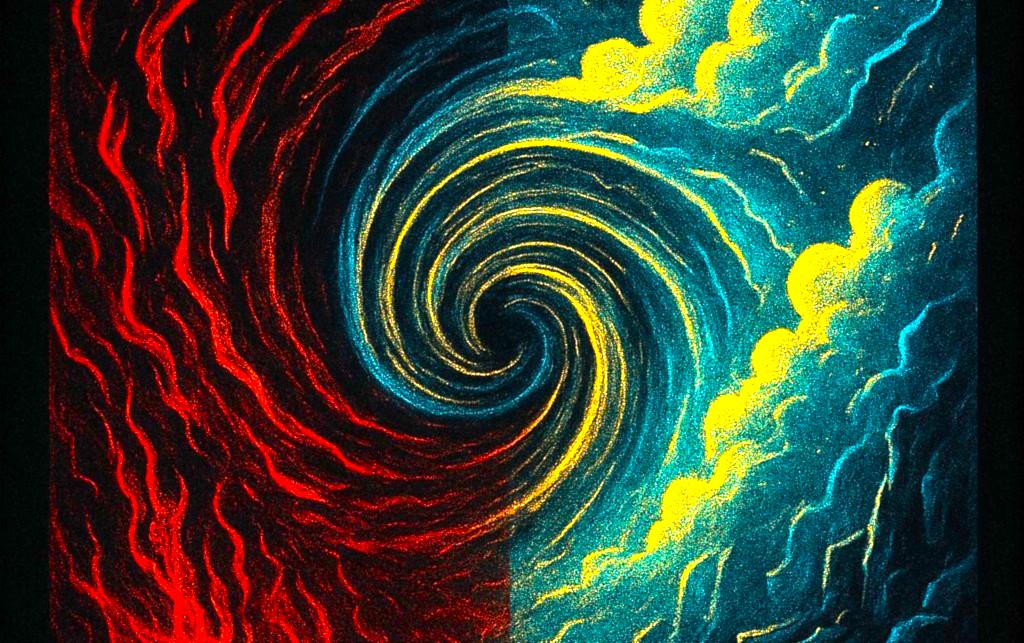
A Film About the Human Condition
At its heart, Nirvana is a map of the psyche. Each act mirrors the soul’s movement from ignorance to illumination — from fragmentation to unity. Rather than relying on external conflict, the screenplay’s real battle is within: between the self that clings and the self that surrenders. It dramatizes the tension every person carries between ego and transcendence. Its hero’s journey isn’t about saving the world, but about realizing the divine within it.
The script is structured by spiritual geometry and unfolds in cycles, echoing reincarnation, memory, and the rhythm of thought itself. What appears chaotic at first gradually reveals a pattern — the screenplay itself becoming an initiation for both its characters and its audience. Every line, every scene is a step toward self-realization. Rather than dialogue-driven exposition, Nirvana speaks through imagery. It asks: what if the screen could mirror consciousness itself?
Visually, Nirvana collapses the boundaries between form and vision. The screenplay’s constant shifts in aspect ratio, tone, and texture make it feel like consciousness itself is editing the film. Dream sequences, animation, and hallucinatory overlays do not simply illustrate drug use; they externalize inner states. In doing so, the film attempts to reveal the invisible.
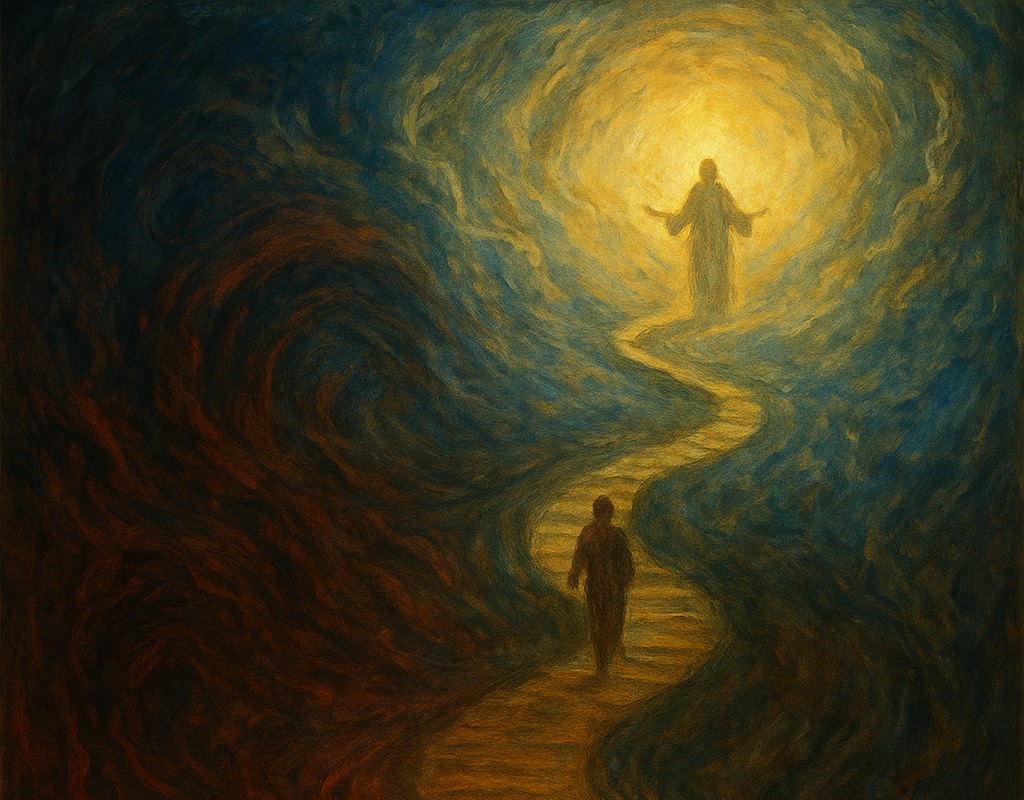
A Cinema of Resurrection
Johnny’s love interest Muse — whose name is no accident — and in the forbidden love story we see glimpses of the sacred feminine as both inspiration and redemption. She is Beatrice guiding Dante. She appears not as a character but as a presence, bridging the living and the dead. Her love for Johnny is what grounds the metaphysical firestorm in tenderness. Johnny’s love for her anchors the film emotionally amid its cosmic abstraction. In essence, Nirvana argues that transcendence is only possible through love — even if that love must first be lost.
This baptism by fire guided by love is what ultimately leads to an inner revelation that the film depicts visually: the ascent to heaven as a psychological reality. Nirvana is a metaphysical experience structured as cinema itself. It asks viewers to die before they die, to shed ego and awaken to divine consciousness. It challenges the limits of narrative realism, resurrecting cinema as a spiritual art — one that doesn’t merely try to entertain but also to transform.